Author Archives: Maurice

  1. Is bigger better?

    1 Comment

    Bigger is better

    Is bigger better? Ask the Japanese and they say no, look at their cars. Ask an American and they’ll say, “You’re damn right!” Just look at their SUV’s.  A few weeks ago I was on a panel discussing Washington Wines with winemakers Bob Betz and Sarah Hedges Goedhart.  During the discussion I was asked if consumers in San Diego were open to Washington Wines. I mentioned that I had seen an increase in people’s interest, however; people still think Washington makes Pinot and Oregon is the same as Washington. I went on to say that most wine drinkers in San Diego like big wines. California wines are a perfect fit for those in search of opulent wines. Washington Wines, on the other hand, although can be just as big, have more structure and subtle nuances.  Of course, wine styles will vary by winemaker, but in general, Washington wines come across more restrained and balanced.

    Personally I like my wines to be restrained. I do not need a punch of oak. I do not need a burst of alcohol and fruit. I enjoy the earthy, floral and bottle aged aromas backed by acidity that make my mouth water. I may be an anomaly. For the most part, wine consumers seem to be in search of bold aggressive flavors. A perfect example is the rise of Pinot Noir’s popularity.  Pinot Noir by nature is delicate, light bodied, gently spiced, low in alcohol and dominated by under ripe fruit and florals. When it was thrust into the lime light in 2004, every wine drinker felt that they had to like Pinot Noir because Miles from the movie Sideways told them so.  What did the Pinot producers do? They did not continue making their subtle lean angular Pinot’s, rather started to push them into obesity. Additions of Syrah did the trick for some. Others replanted where they could get more sun and ripeness and yet others used the laboratory to build Pinot’s muscles. Prior to 2004 Pinot were more reminiscent of a Jude Law and today they are more like a John Cena.

    Why? I wish I knew. My inclination is that it is part of the American ideology that bigger is better. Here is the example I used at the Washington Panel:

    Have you ever gone to an all you can eat buffet and looked around? How many people will take the time and walk around the buffet to see what is being offered. After assessing the spread, do they grab a plate and carefully select items which complement each other? For example, do they serve themselves a poached egg, grilled shrimp and asparagus, return to their seats and enjoy the combination of flavors?   We can agree, this is not common.. More likely they grab a plate at the beginning of the line, piling their plate with everything along the way. They might even grab a second plate and fill it up too. When they dig in to eat they have gravy on their salad, carrot juice on the prime rib and a mound of mashers suffocating the grilled shrimp.  ARGGGHH! They dig in, shoveling it into their mouth.

    This is a classic scene throughout America. We are not a nation of refinement, we do not seek pleasure in the nuanced flavors. We want it all and we want it now. This is the mentality of how we chose our wines. It has got to be big! “Man, look at those legs”, is something I have heard all too often when someone is complimenting their wine choice.  Wine is just like a woman, beautiful legs have nothing to do with quality. Those crimson thick slow running legs are alcohol trying to separate from water. Thick legs means one thing, high alcohol. High alcohol is the result of a grape with a thicker skin providing more color and tannin. Typically, thicker skins mean warmer climate, indicating more sugar, resulting in a full body.  A consequence of a full bodied wine is that is has lower acidity. Lower acidity means it is less likely to pair with food. I may be digressing here, but my point is that we are in danger of equating quality with one style of wine, big opulent fruit forward wines.

    Climate and WIne Pic1

    A slide I use to teach staff

    Where does this come from? I attribute it to prohibition and modern society. 13 years sans alcohol. Large companies monopolizing the food industry creating fast food, Coca Cola, microwaveable and processed foods. We lost touch with bitterness and tartness. Those senses were replaced by sweetness like wonder bread, velvety cheese and light beer. For decades we lost the path of what vegetable should taste like. As a boy I was served canned and frozen vegetables, for what reason I do not know.  Ketchup and mustard became a staple and used regularly as we use salt and pepper. We became glutinous and in search of sweet flavors.  The Pepsi Challenge proved we liked sweeter drinks. However, it also proved that we like them for a short time and cannot drink more than one at a time, hence; Coke now dominates the cola market. And the same goes for wine. Today wineries make wines for our post prohibition palate.  Big bold wines are perfect for our white bread, Oscar Meyer, mustard and ketchup, soda drinking society, but drink one glass and you are done.

    ht_pepsi_challenge_button_jc_150311_4x3_992

    Interestingly, during the Pepsi Challenge, Pepsi would win in blind tasting because it was sweeter. Coke came out with New Coke, a sweeter version. Eventually discontinued it when they realized people could not drink more than 1 Pepsi, it was too sweet. The drier Coke ended up winning in the long term.

    People always ask me what type of wine I like with the hopes of turning them on to something new. I have a hard time giving a recommendation.  I know that most people love the all you can eat buffet bar because they can pile it on. The wines I like would get lost in a buffet, they are the shrimp and poached egg, the prime rib and masher with gravy; not the mounds of goulash most people like. However, I would not be doing my job if I did not try to steer people in a certain direction. We were hunters and gathers at one time, tearing fresh meat off the bone, and now we stand in line in a buffet. So there is some hope for the American palate.  I have decided to give a few recommendations of wines that I call cross over wines. These are wines that have elegance, but still quench your thirst for boldness.

    • Grenache from Australia. These wines can vary depending on the type of climate. They can be big and alcohol forward or light and Pinot-like. I love Grenache for its red fruit, rose aromas and bright acidity. My favorites are from the McLaren Vale, old vine Barossa or Adelaide Hills.
    • Syrah from Washington State. Another chameleon-like Rhone variety that shows a sense of place. Syrah from Washington can have a touch of earth and acidity from the Rhone with the fruit and spice of California. They are full bodied wines that quench your Cabernet thirst.
    • German Riesling. Most people like Chardonnay for its full flavor. But it can get overwhelming and saturate your palate with alcohol and wood. Riesling is full of flavor, but does not overpower, rather it’s racing acidity and lower alcohol leaves your mouth craving more. And not all Rieslings are sweet, however; a touch of sugar really makes me happy. Look for Trocken (dry) or Kabinet or Spatelese (hint of sweetness with more concentration)
    • Barbera from Mexico. Barbera is typically a light bodied, high acid and low tannin grape. However, in Baja California it takes on a whole other personality. It has more body, but does not need oak to give it dimension. It retains lovely red fruit acidity with more texture. Hard to find, but when you do, go for it.
    • Carignan from Chile or California. Carignan was the work horse for all the millions of cases of box wines sold in the US. But when planted in the right soil, the wine is fantastic. It has a racy nature like Pinot, but more tannin and color. Such a fun wine and makes dinner much more enjoyable.
  2. The Dos and Don’ts of Dining This Holiday Season

    1 Comment

    Family Dining

    If you have  ever worked in the service industry, you would know that the holiday season is the strangest time of the year. It seems that the holidays brings out the worst in people.  This year we have no time to indulge in negativity. We need to change our habits while dining this holiday season.  As Jon Oliver put it, 2016 has been a F…up year.  Regardless of where you stand on your political, social and economic views, it is safe to say that we are pretty divided. This has to end!

    FAMILY DINING THIS HOLIDAY SEASON

    Every holiday season I see this happen.  Families get together because they feel like they have to.  The result is a horrible experience for them and for the restaurant. Here is a look into a typical American family dinner:

    1. The father is upset he is not watching the game and pissed he has to sit with his mother-in-law

    2. The teenage kids are bored as can be, and embarrassed by the fact that mom can’t eat anything on the menu because it doesn’t fit her gluten-free diet.

    3. Grandma can’t hear a thing, so everyone needs to talk in loud voices, which brings more embarrassment to the teenagers.  Especially when the parents begin to talk about the kids’ personal affairs.

    4. Grandpa is pissed that he has to pick up the bill, and is actively looking to catch the server in a mistake so he can receive a discount.

    This scenario is all too common for servers. The server is walking on eggshells, trying not to ignite the volatile tension at the table by making a mistake or saying the wrong thing.

    This is not fair.  If you do not enjoy being with your family, please do not take them out.   The restaurant staff could be with their families, but instead are working so others can enjoy the holiday.  And it sucks if you can’t enjoy it because you can’t get along with your mother-in-law, you obviously are taking the day for granted.

    This brings me back to 2016.  So much has gone down this year.  All this stuff is outside of our control.  What we can control is how we interact with our loved ones.  Family is all you really have. Yes, they can annoy the hell out of you, but that is because they know you and you know them so well. Stop trying to control who they are and learn to accept them.  When it is all said and done, they will be the ones responsible for your funeral and carrying on your legacy.  This year, go out with your family on the holidays.  But this time, enjoy their company. Put aside your disagreements. It is not a time of giving, but a time of accepting. Accept your family for who they are and be kind to you servers.

     office party

    OFFICE PARTIES

    The holidays also bring out the demons we have suppressed all year-long.  The worst part is that they usually come out at the office holiday party. There is always one person whom you thought you knew, and then WHAM! Put a little alcohol in them and they transform into another being. The problem, is that they usually do not remember what they did.  This year, don’t be that guy or girl who has to ruin the party.  So many companies have stopped throwing holiday parties because of the one person who cannot control their alcohol. How can we prevent it this year?

    1. If you normally do not drink alcohol throughout the year, don’t start the night of your office party.

    2. Do not pressure your quite co-worker to drink that night, you never know what you are going to get.

    3. Throughout the year, voice your concerns about your boss and co-workers directly with them. Do not bottle up everything and let it all out the night of the party. Uncool!

    4. Do not bring a date to the party whom you do not know. You never know what you are going to get. It can cost you your job.

    scrooge

    THE SERVICE STAFF

    Remember that employees of the restaurant have families and friends and have either chosen or been scheduled to work on the holiday.  They could be at their friends’ or family gathering, but instead they are serving you. Be respectful. Don’t ruin their day just because you can’t hold your liquor or get along with your family. Be generous, tip them properly.  Do not be a Scrooge.

    HAPPY HOLIDAYS!

  3. Australian Wine Journey

    1 Comment

    Australia Wine

    The time is here and I am about to embark on a journey to the land down under.  It has been 15 years since the last time I visited.  Back then I was in a van driving from one coast to the other.  Although I did get to see some vineyards, the purpose of that trip had very little to do with indulging in the wine culture, rather experiencing the nightlife culture.  Today I am older and more mature and look forward to revisit Australia with brand new eyes. This time, a bit less glassy-eyed.

    Maurice in Australia 2001

    traveling for 6 months in a van back in 2001

    Tim Wildeman MW takes 12 people from around the world each year on travel throughout South Australia.  I am honored to be selected among such an esteemed group of wine professionals from around the world. I am looking forward to this adventure.

    Australian wines have received a bad reputation over the past ten years as these labels with animal graphics invaded our bottom shelves of our supermarkets.  It is similar to what happened to Merlot in the 90’s.  Merlot was the “it” grape and everyone wanted to be seen with her.  So much so that wineries sacrificed their integrity and populated the bottom shelves with cheap Merlot.  This gave Merlot a bad name, and when Miles came out and said, “I don’t drink no F…’n Merlot”, it was the end.  Merlot is a fantastic wine, but it will take years before she rises to the top again.  Well, the same could be said for Australian wine.

    merlot

    Those animal printed bottles gave a bad name to Australian wine.  It is unfortunate to see a nation with a long history of producing high quality wines come to decline because of a Kangaroo with a boomerang.  A few weeks ago, Matt Stamp MS, gave a seminar in San Diego. He blind tasted us on an Australian Semillion.  The wine was outstanding! It had racing acidity, expressive fruit and confused everyone for French Chenin Blanc. I was blown away.  I am looking forward to discovering more wines like that.  I can’t wait to taste Grenache from 80-year-old vineyards, Riesling with mouth-watering acidity and take a peek at the craft beers.

    I look forward to sharing my experiences with you.  Hopefully I will have a new fondness for the land down under. Cheers!

    ———————————————————————————–

    36 hours later

    Finally arrived in Australia! All my flights had a delay but I made it to the meeting point in the nick of time. I met up with my group in Melbourne and immediately jumped on a bus headed for Gibbsland to meet Bill and Rachel Downing of Downing vineyards.  What a surprise! We arrived in this farmhouse wine making facility in the countryside. I immediately knew this was going to be a good trip.  Each of the large barrels had a name, one of them was Maurice.  Coincidence?

    Maurice

    Bill Downing focuses on small production Pinot Noir from Gibbsland, Yarra Valley and the Mornington Peninsula.  He is a natural wine maker. He is focused on the vineyard.  The vines are small and kept low to the ground.  There are native grasses and plants throughout the vineyard creating biodiversity. It is dry farmed bio-dynamic vineyard. Bill believes in biodiversity and says he makes his wine in the vineyard and not the winery.  Wine making is easy, he just presses the juice and puts it in barrels, the rest is up to the grapes. This hands off approach was a relief to see, especially since when I think of Australia I think big opulent wines.  Downing wines are austere, yet elegant and true to variety.  I think he would correct me and say they are not true to variety, but true to place.

    Downing Vineyards

    If this is an indication of what is to come, then I am in for a magical two weeks.

  4. Don’t Let Wine Labels Get The Best of You

    Leave a Comment

    wine labels

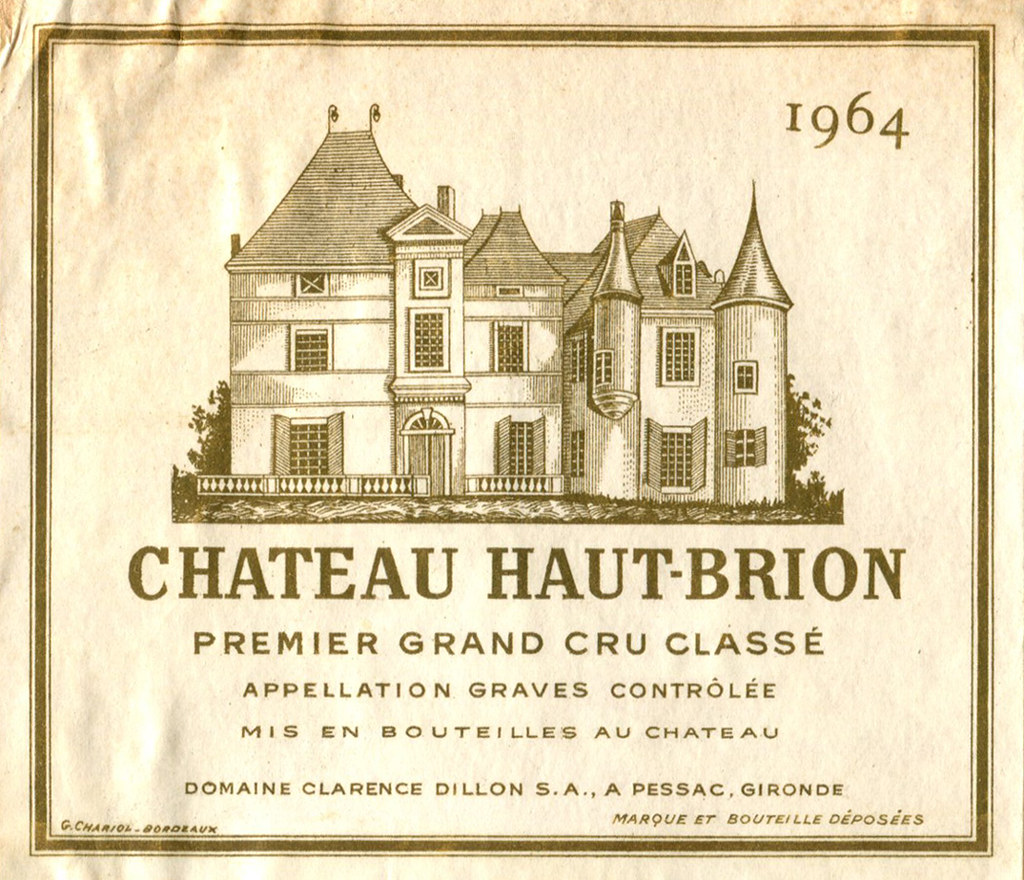
    A few months ago month I spoke at the Ramona Valley Vintner Association’s Wine & Grape Symposium about wine labels.  Local wine makers, winery owners and home wine makers met at the Escondido Center for the Arts and listened to professionals give advice on wine making, vineyard management and wine sales.  RVVA asked me to speak about wine labels.  The earlier month while judging the Ramona Valley Vintner Wine Competition I opened my big mouth and said something like, “it is really hard to sell Ramona wine when the labels look like this.”  I was referring to a wine with cursive writing and photo of a tree and animal.  It looked like a label made for a wedding.  I realized several people became interested, they wanted to hear more and asked me to expound on the subject. It annoyed me that I added to my work load, yet I felt flattered they asked for my opinion and I could help my local friends.  I put together a presentation called Wine Labels: how to sell to restaurants.

    I began my talk by mentioning they need to know their consumer before designing a label.  Are you intending to sell your wine to one of the Orange County Housewives, to a sommelier at a fine dining restaurant or out of the tasting room to a tourist from Nebraska?  The basic principle of marketing is knowing your consumer and tailoring your product to fit that consumer’s taste.  Most wineries would say that all three consumers are their targets.  So this means the label would have to attract a larger consumer base, and now designing the label is that much more difficult.

    Consumers need to know some very basic things when looking at the label.  What type of wine is it?  Is it red or white? Is it a Cab or Pinot? Where is it from? How much alcohol does it have? Luckily these are all required by law.  What the consumer does not know is if the wine is good or not. They do not know the wine’s quality by looking at the label.  I told the RVVA members that it was their job to tell the consumer what the wine tastes like through the design of the label.  Every winemaker believes their wine is a wine of quality.  Not everyone will agree, but they have to sell it so when the consumer sees the label they associate the wine with quality.

    HAH!! Not what I mean.

    This is not easy to do, especially if you are not a graphic artist. I gave examples of labels ranging from old traditional Bordeaux labels to labels with big black letters stamped across the front.  I showed pictures of thick dense bottles with textured paper and gold leaf.  I showed pictures of labels which were simple and minimalist.  I pointed out how the millennials are all about the graphics and how some very bad wines have eye-catching bottles millennials just need to buy.  I showed them graphic labels which combine old school elegance modern chic.  The basic premise was the label has to tell us how the wine tastes.


    Too many wineries want to put their story on the label.  They have their code of arms, their favorite dog, the rocks by the ravine near the property and so on.  They fail to look at their label through consumers’ eyes.  “My grandmother loved to crochet so this ball of yarn and needle on the label pays tribute to her.”  NO! You cannot do that. You can tell your story, but it needs to grab the consumers attention.  Whether you choose the Chateau, the big bold black writing or engraved gold leaf, the design has to tell us what is in the bottle, not that your grandma sewed.

    I then began thinking about the consumer.  It is hard to buy a wine.  There are so many wines on the shelves.  We each shop for wine in different ways. We are either looking for a certain type, meaning grape, grape blend or region.  We shop for by price. Sometimes we want a wine to impress and other times a wine to drink at the next barbeque. Boring as it is, most people buy wine because they are familiar with it. This explains why the large companies are buying and bidding for the old staples in Napa.

    The wine business is colossal and unfortunately condensed into the hands of a small group of national and multi-national corporations.  You will never know when buying your beloved Sauvignon Blanc, classic New Zealand full of citrus and grassy aromas, you are buying from the same company that makes box wine in Brazil, brandy in France, animal graphic bottled Shiraz from Australia and overpriced Napa Cab. Consumers are left in the dark as to who really makes the wine and what that wine taste like.  This is why so many stick to what they know and are afraid to experiment.  I do not blame them,  they once bought an unknown eye-catching label with black background and red writing which looked like it would taste big and bold but turned out tasting of swill with residual sugar.  Probably one of the wines also made by the company that boasts the overpriced Napa Cab.

    So as a consumer how do we know what to look for?  Before I help you with this question, I need to ask you a few.  What are you looking for? Are you looking for a story? Are you looking for an artisanal wine? Are you looking for something that is easy to drink and don’t have to think about?  There are many criteria to the consumer’s needs.  I do not think I can give you the best answer about what will be in the bottle just by looking at the label, but I can give you some clues.

    Look for the alcohol level. It is found on the front, side or back of the bottle and usually hard to find. When you do find it, be leery. Legally they can fudge the percentage by a few points. The alcohol level tells us how the wine might taste.  The more alcohol means more body. Less alcohol means less body.  More importantly this will give you clues to the wine’s acidity level.  Consumers deem acidity as a bad thing, but it is the backbone of wine and it is essential to have balanced acidity or else the wine can taste and feel flabby.  If the alcohol level is higher, that means there was more sugar in the wine prior to fermentation.  If the grape has more sugar then its acidity is lower. If the wine has lower alcohol then it should have greater acidity.  So far the front label will give us clues to its flavor.  You know the grape, vintage, where it came from and have an idea of its body and acidity levels.

    Now stop looking at the front label and turn it around and read the back.  Skip that mumbo jumbo about cherries, field flowers and chocolate. Focus your attention to the “Produced and Bottled by” part of the label.   Many  times the front label only has the name of the wine and not who made it, this information will always be on the back.   Here is what you need to know. The back tells us how much say the winery had in its production.

    Cellared and Bottled by” & “Vinted and Bottled by” tell us that whoever bottled this wine had very little to do with the actual wine making process. They bought wine, maybe blended it with other bought wine, bottled it and slapped a label on it.  This exact same wine is most likely in other bottles with different labels.

    “Made and Bottled by” tells us that at least 10% of the wine is made by the winery on the label. The rest of it is purchased wine and blended. Many of the wines with the above designations, will not have the winery’s name on the front, rather you will have to hunt for the name on the back.  Production of these wines is usually high. These are commodity wines, made to sell and fill the demand for inexpensive juice. However, many times they are not that inexpensive, but have great labels.

    “Produced and Bottled by” lets us know that at least 75% of the wine was actually crushed, fermented and bottled at the winery.  The other 25% could have been made by someone else.  This does not mean they grew the grapes and made wine.  Most with this designation bought their grapes. However, many of these wineries have long-term contracts with grape growers and have a say in how to cultivate the grapes.

    “Grown, Produced and Bottled by” is exactly what it means.  They grew grapes and made their own wine.

    “Estate Bottled and Produced” means that the wine was made from grapes on the property where the winery stands, they had full oversight of the production of the wine and bottled on the estate.  These are the wines which slap their winery name right on the front label with pride.  They want everyone to know they produced the wine.

    We think we are savvy consumers.  But be careful, there has been a lot of research by large wine companies on labels and selling wine. Marketing drives the wine business.  They still have the upper hand and sell millions of cases of swill because they invested their money on marketing and not the vineyard. Hopefully these few tips will help you in choosing your next bottle of wine. More importantly I hope our local friends at the Ramona Valley Vintner Association put more thought into their labels.  The competition is fierce and these massive wine conglomerates have no mercy.

  5. California Wine Month 2016

    Leave a Comment

    california wine month

    September is just upon us and it is my favorite month of the year.  The kids have gone back to school, the beaches are not so crowded and we get to celebrate California Wine Month again!  Last year I hosted wine dinners, tastings and promotions in all my restaurants.  This year I am going bigger!   Check out what I’m up to!


    WINE DINNERS

    If you are the foodie who wants to see what our chefs perform under fire, then the wine dinners are the best option for you.  I am hosting 5 wine dinner/lunches in September, each different and all with California wines.

    333 Pacific Napa Wine Dinner

    The first dinner is on September 1st at 333 Pacific featuring Napa Valley wines.  Steve Zurkey, the talented chef at 333 will blow you away.  His Mondavi dinner in June was one the best meals I have had in San Diego.  I do not say this because he works for my company, but because it was the god honest truth.  Everyone walking out from that meal was awestruck.  He is back again and this time pairing the Napa wines of Cliff Lede, Alto, Kuleto and Merus.

    Sonoma Wine Dinner

    Why not stay in Northern California and see what makes Napa and Sonoma so different from each other.  After attending the Napa dinner in Oceanside, head to Escondido the following week and try the wines of Sonoma at Vintana Wine + Dine.  Foley Wines will be showcasing their Sonoma wines from some of their top vineyards.  Chef Bryan Brown is an old hat at these dinners and is always outdoing himself.  He gets to play with flavors from the kitchen and pair them with the wines of Schug, Mazzocco, Roth and Chalk Hill.

    Organic Wine Dinner

    September 11th we get socially responsible.  Bo Beau Kitchen + Garden in La Mesa will have chef Tyler Shipton pairing organic produce and meats with Frog’s Leap Winery from Napa.  Our Organic Wine Dinner features the wines of John Williams, pioneer of organic farming since the 80’s.  Frog’s Leap continues to produce high quality wines using sustainable farming techniques which restore and promote the ecosystem.  Unfortunately September is a tough month for winemaker’s to get away from harvest, John will not be able to join us.  He will be there in spirit and Gail & Dan Berquist who distribute his wines in San Diego for the past several decades will be on hand to discuss them.

    San Diego Winemaker Lunch

    Sometimes you want to have wine during the day, so Indigo Grill has just the thing for you.  Enjoy a Sunday afternoon in Little Italy and join Chef Deborah Scott for a Luncheon on September 18th.  This will be an intimate lunch with two of my favorite wines from San Diego County, Orfila and Stehleon.  Both Justin Mund, winemaker for Orfila and Al Stehly, owner of Stehloen share their experiences with you over lunch. If you have not tried the wines from your back yard, this is the time to do so.  These wines are fantastic and soon will put San Diego on the map.

    Paso Robles Wine Dinner

    We then will head down towards Southern California on September 22nd and host a Paso Robles wine dinner at OB Warehouse with Adam Lazarre.  If you are looking to have a good time and get away from stuffy pompous dinners, then this is the one for you. Adam is one of the craziest wine makers I know. He is all about having fun while making delicious wine.  We will feature several of Lazarra wines along with some of his friend’s wineries such as Cypher and Broadside. OB is the perfect place for this event.

    WINE TASTINGS AND SEMINARS

    September 1oth Coasterra will host a VIP viewing area of the Fleet Week Sea & Air Parade and California Wine Tasting on the new Harbor Float overlooking the San Diego Bay and the city skyline.  The Sea & Air show is a spectacular event where the US military parades its air crafts and battleships on the San Diego Bay.  To make this even that much better I have invited 20 California wineries to pour their wines and commemorate California Wine Month.  Chef Deborah Scott will provide action food stations and passed hors d’oeuvres.  This event is a walk around event is standing room only.

     Sea & Air Parade

    September 17th Sea 180 Coastal Tavern has invited California sparkling wine producers to come and pour their sparkling wines as we pair them with oysters.  We call it Oysters and Bubbles! There will be tray passed hors d’oeuvres, oyster shucking demonstrations, cocktail sauce and mignonette making and best of all oyster and bubbly wine slurping.  All this will take place on the poolside patio overlooking the white sands and blue waters of Imperial Beach. To add a little vibe, Adrian Ahearn, our favorite steel drum player, will provide the mood with his island tunes.

    Sea180_OystersBubbles_081116


    Finally, after all this celebration I tone down the partying and get serious about education.  On Saturday September 24th at Island Prime Restaurant I will hold a seminar and tasting on the History of California Wine.  I teach a 3 week course at SDSU’s Business of Wine Program titled the California Wine Intensive.  This 2 hour seminar is a condensed version of that course.  We will taste 10 wines which exemplify California’s history.  This is a classroom style tasting, hors d’oeuvres will be served following class and all the wines will be available for purchase.

    California wine history


    PROMOTIONS

    From September 6-15th, I have several of our restaurants participating in my favorite promotion of the year, WINE & DIME.  For ten days, there will be a list of ten wines for $.10.  Come in and buy 1 glass of wine at the regular price and get a second of equal or lesser value for $.10!  What a deal. The wines are all high quality wines from several of my partners such as Foley Wines and Treasury Wine Estates. The list will vary from restaurant to restaurant with a few staples at each location. Participating restaurants are 333 Pacific, Bluepoint, Bo Beau Ocean Beach, Bo Beau La Mesa, Gaslamp Strip Club, Indigo Grill, Island Prime & C-Level, Melting Pot, OB Warehouse, The Prado, Sea 180 & Vintana Wine + Dine.

    Wine and Dime


    We finish off the month with Restaurant Week.  This year Restaurant Week is from September 25th-October 2nd.  Our restaurants will offer special prices on bottles of California wine starting at $20 per bottle to be enjoyed with our Restaurant Week offering. What a great time to visit more than 1 restaurant a week, get a fantastic price on your meal and compliment it with a ridiculously low priced quality wine.

    So much is going on in September!  Keep me in mind when you plan your month.  I have something for everyone. Happy California Wine Month!