I have sung the Little Drummer Boy to my kids for years now. It is the bedtime lullaby that guarantees lights out. While I was singing it this evening to my daughter, I decided to change the lyrics. Something has bothered me for a while. One of the restaurants in my company is a wine oriented establishment. When we opened the restaurant, our intention was to serve the house wine in small glasses similar to what you might be served in Spain. The intention was to keep the wine approachable and get back to the root, drinking the stuff without getting all gaga goo goo over it. The only problem is that we also serve wines that call for a proper wine glass.
Call me a snob, I don’t care. I am a believer. It’s not the size of the wine that matters, it’s all about the glass. I think that if you drink wine out of the proper glass the wine will express itself the way its intended to. Drink Pinot Noir from a pint glass and then drink the same Pinot Noir from a Burgundy glass and tell me if there is a difference. Absolutely there is a difference. The beer guys know it. I “real” beer guy does not drink a Belgium beer from a pint but from a glass shaped like a Pinot Noir glass. If you have not sat through a Riedel wine glass seminar, I urge you to do so. It is uncanny how the same wine served in a different vessel really changes.
As I lay next to my daughter this evening, singing the words to the Little Drummer boy, I was thinking about how people have sent wine back at the restaurant served in a squatty “water-glass”. Maybe the wine is bad? If so I better change the list. But maybe it’s just the glass. So here it is, the song that drove my daughter into a deep slumber. I have a feeling her dreams will be a bit confusing tonight.
The Little Drummer Boy Plays on Riedel
Come they told me Pa rum pum pum pum
Taste this wine for me
Pa rum pum pum pum
Something’s wrong with it
Pa rum pum pum pum
I don’t enjoy it
Pa rum pum pum pum,
rum pum pum pum,
rum pum pum pum
What do you think
Pa rum pum pum pum
Is it gone
Crazy lady Pa rum pum pum pum
The wine is perfectly fine
Pa rum pum pum pum
There’s nothing wrong with it
Pa rum pum pum pum
It taste sound and fit
Pa rum pum pum pum,
rum pum pum pum,
rum pum pum pum
Let me see your glass
Pa rum pum pum pum
Oh how dumb
I should have known Pa rum pum pum pum
Your glass is not Riedel
Pa rum pum pum pum
I shared my glass with her
Pa rum pum pum pum
I shared my wine with her
Pa rum pum pum pum,
rum pum pum pum,
rum pum pum pum
Then she smiled at me
Pa rum pum pum pum
That wine taste yum
On December 11th I will be back at it again, making outrageous wine pairings. I will attempt to pair Champagne and Lexus sports cars. I don’t want to hear anything about drinking and driving, that is not what I am condoning. Let’s get off our PC high horse, we all know drinking and driving is wrong. I am a conceptual artist so let me have some fun. (In moderation of course).
The idea first came to me when my good friend, the wine buyer at Vintana of Escondido, Sheehan McCoy came to me and said he wanted to have a Champagne event inside the Lexus dealership which share the building with Vintana. Those that know me, know that I could not resist another attempt to demystify wine. I thought Sheehan’s idea was great. So expounded on it and paired each car with a particular champagne. Because tasting wine and seeing cars is not enough for me, I had to put together a short video which walks you through the pairing.
What it all really comes down to is that the Lexus IS and the Lexus LFA Super car are down right sexy cars. The only wine that can really pair with these cars is Champagne. They share many things in common. Lexus and Sparkling wine are the creations of great minds. Both will stand the test of time. Both are sleek, classy and are exhilarating. The Lexus IS F Sport is the more affordable of the two cars. It has power and performance which needs a sparkling wine that is affordable but over delivers. I paired it with Gloria Ferrer Royal Cuvee, a creamy sparkling wine with great acidity. The LFA Super car is rare and in a completely different class. This car was meant for the race track. See this car turn the corner down your street and heads will be turning. There is the white LFA inthe show room which I paired with the elegant, refined Ruinart blanc the blanc. The black LFA looks more serious so I paired it with one of the world’s leading Champagne’s Moet n Chandon Imperial Rose. This wine is much more serious, fuller bodied with structure only Pinot Noir could give.
It gives me goose bumps the size of Champagne bubbles when I hear the roar and hum of the engine. Any person arriving to a party in either of these cars deserves to be given a glass of Champagne when walking in the door. These cars are supreme and deserve a supreme wine, you cannot get more supreme than Champagne. Champagne and Lexus are meant for each other. If I have not proved it yet, then maybe this will blow your mind. The first Lexus commercial in America was a Lexus with a stack of Champagne glasses on its hood showing how smooth the engine ran. Bam! There you go, Champagne with Lexus the perfect pairing.
If you would like to attend the event on Wednesday December 11th you can buy tickets here:
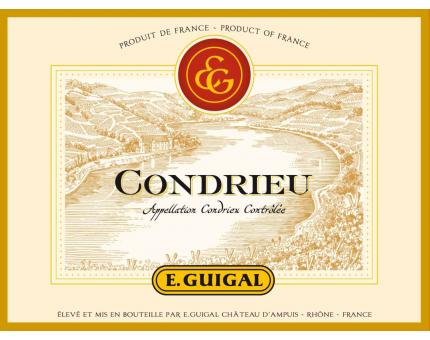
“WhINE to the music” is the art of pairing grooves with wine, such as Disclosure & London Grammar singing “Help me lose my mind” with E. Guigal Condrieu. We have been drinking wine with music since the dawn of wine. I don’t think music would have evolved without wine. Most people tend to turn up the music when they drink wine. Whine to the Music is not just sitting back, drinking wine and getting teary eyed. It is a concept like ART and Wine Pairing, where we dissect the structures of the wine and the art to its basic elements. The structural elements eventually create an emotion in us. Whine to the Music is the art of pairing wine with music based on the emotion they evoke in us.
Open a bottle of Condrieu, watch the video and read the post:
One of the most “under drunk” great wines of the world is Condrieu. When I watched Dislcosure & London Grammar’s video for the first time, I could not believe that I had not seen it before. It reminded me of a wine I do not drink enough, Condrieu. The wines of Condrieu in the Northern Rhone are expensive, and maybe that is why I don’t get to enjoy them regularly. However, Condrieu produces the best Viognier in the world. Condrieu sits at the most Northern point of the Rhone Valley. Thomas Jefferson raved about these wines. Here is why I believe E Guigal 2011 Condrieu and Disclosure& London Grammar make a great pairing:
Aromas and Flavors: The song, “Help me lose my mind”, has a steady deep bass, with a sultry voice sung over it. But what brings the two together is the synthesizer. The synthesizer brings life to what could otherwise be a sad song. It lifts the beat and provides a melody for the sensual vocals. The wines of Condrieu have lift. The aromas and flavors are lively and fresh. The aromas of apricot, white peaches, honey and white flowers are the melody which give the wine a durable framework. One can imagine white flowers falling from the sky while on the dance floor dancing to this song.
Body: When comparing a wine’s body to music I try to match the wine’s weight with the fullness of the sound of the music. This song has some weight, I would say a medium to full body. Viognier from Condrieu has a medium to full body. The synthesizer lowers the body of the music just a tad. If there were more drum and guitar the weight would increase and Viognier would not pair. However, the balance of the synthesizer with the bass allows this song to pair with Condrieu. The rhythm gives the song and the theme of the words give weight to the song.
Acidity and Alcohol: Acidity is the key element in a wine’s structure. Condrieu is made with Viognier, a grape of lower acidity. It is known to have increased alcohol which might come across as a burning sensation on the tongue. The fruity, floral balance of flavors combined with a rich texture on the palate, offer the wine’s structure. When a wine, such as E. Guigal Condrieu, is carefully made there is no better wine. Disclosure has a somewhat simple song backed with sultry vocals which matches the wine’s texture. The “simple” complexity of Condrieu matches the simplicity of beats and melodies. The sounds are bright and melodic just as the wine is bright and rich, without being flabby. What might seem simple, is actually quite complex and gratifying.
Final Impression/the Finish: The E. Guigal 2011 Condrieu is an absolute delight. It is fresh, clean, full-bodied and full of flavor. After tasting the wine, the honeysuckle and peach flavors stay with you for a long time. There is no searching for a finish, the wine is long-lasting and when it drops off this slightly oily texture resonates on the palate. I do not get tired of this song. I can put it on a loop and listen to it all day. There is a calming yet energetic feeling that comes over me. After finishing a bottle of E. Guigal Condrieu all I can do is wish I had another bottle to loop after it.
Over the past six weeks I was taking a night class at San Diego State University focusing on craft beer. It is a beverage type that has been steadily increasing since 1996. Listening to me talk about beer has shocked many of my colleagues because they have always known me as the wine guy. Little do they know is that after a long hard day at work, I usually crack open a bottle of beer and not wine. I do this for two reasons, first of all the beer is cold and refreshing. Secondly, opening a full bottle of wine would force me to drink a full bottle. Once opened, I can’t let it go to waste. Now, the title of this post says, Grain versus Grape. So in order for the title to make sense and hit all the SEO points I need to hit, I am going to put wine and beer styles head to head.
Before I begin, let’s take a look at beer and its enormous growth in popularity. Since prohibition, when beer and all other alcoholic beverage industries flat lined, beer has been on an increase. Immediately following prohibition there were macro breweries focusing on making a beer that was easy to drink. They pleased the new adults of legal drinking age who were not accustomed to drinking. Instead of brewing those dark beers brewed in England, Germany and Belgium, they chose to brew light-colored beers made with inexpensive adjuncts such as corn and sugar. These beers were accessible to the new American drinkers. Soon with the help of advertising, these macro breweries dominated the beer market. Not until Jimmy Carter allowed home brewing in 1976 did we see real beer come into the marketplace. With innovative breweries such as Anchor Steam, Sierra Nevada and the New Albion, beer became craft. Today the market place has seen a drop of 1% in beer sales, but an increase of 5% of craft brewing. This can only mean that people are not drinking fizzy yellow beer and looking for proper brews.
My company sent me off to take this beer course so that I can stay with the times. They believe that beer is soon going to take over wine sales. I don’t believe that is true. I think both can live harmoniously together in the same market. I see craft beers taking over the sales of macro beers and not so much wine. You are either a beer drinker or a wine drinker, or both. See plenty of space for all of us. But lets put them head to head anyways, just for fun.
WINE AND BEER STYLES GO HEAD TO HEAD
There are two types of beers, lagers and ales. However, within those two beer types, there are thousands of styles that range from beers using pale malts with noble hops that are light in color, such as a Pilsner, to dark roasted malts with double American hops such as an American double stout. Within these 2 styles there are hundreds more. Most all beers use a percentage of pale malts to give the beer structure. After that, the percentage of roasted, smoked and charred malts will change that beer into a completely different style. And then within each different style of beer based solely on the percentage of pale and roasted malts, the addition of hops will decide a whole new style. Hops are what provide bitterness, aroma and flavors. Hops that are grown in different terroir have different flavoring characteristics. So a beer made with pale malts will vary style by the addition of either West coast hops (American), Noble (German), Nelson (New Zealand) or Goldings (English) and this list is also endless. That pale malted wort (wort is to beer as must is to grape) will change drastically by the hops the brewer has chosen to add. Next variation in style is the choice of yeast during fermentation. Will the beer be a lager or ale. Will that same beer be tank fermented, barrel or bottle fermented. Just by having a few different choices, the brewer can make hundreds of styles from one type of wort. At this point we haven’t even spoken about additives and adjuncts. The brewer can brew with coffee, chiles or what ever they want to experiment with. This takes that one simple style of beer to an infinite number of styles.
So many beer drinkers feel that wine is way too complicated. I look at beer and think, “how can you wrap your head around so many styles?” Those same people believe that wine is snooty and pompous because we use words such as creamy, oaky, full-bodied and tannins. I believe that those people don’t drink good beer. Because when you drink a Greenflash Serrano Chile Double stout one has no problem using words such as full-bodied, malty, chocolate, nuts and a spicy finish with a slight mineral note. Those beer drinkers that knock wine for its lingo, do not drink good beer, because if they did, then they would get it. It wouldn’t just be refreshing and less filling.
Beers can be sweet or dry. They can range from young, drink now beers to beers those that need cellaring. They can use different yeasts which create different esters. You can see an obvious difference even if you are a novice beer drinker from one to another. The colors have a huge variation and the hops intensity really differentiates one from the other. The tactile sensation on the palate is a lot more distinguishable from one style to the other. Certain beers are more astringent while others coat your tongue in creamy maltiness.
Wine styles are based on grape types, regions and vinification methods. This is important when comparing the two, because in some ways it comparing apples and oranges. Beers come from grain, grain can grow in abundance and are not dependent on vintage. Beers is made year round. Wine comes from grapes, a crop which is only harvested once a year. Grapes are dependent upon their soil, climate and vintage. A slight change in temperatures at the time of harvest can make wine making very difficult. The crop needs to be monitored and cared for all year-long until its harvested. For this reason, wine has fewer styles. Winemakers are less apt to experiment in creating a new style of wine because they only have one time in the year to get it right. So most stick to traditions.
There have been winemakers that have experimented in creating new wines, some have succeeded and others have failed miserably. Winemakers are limited by the grapes they use, the place where those grapes came from and the process of making wine. Let me explain. There are maybe 6 wine styles made from grapes: white wines, red wines, rose wines, sparkling wines, late harvest (sweet wines) and fortified wines. Within each style of wine there is some variation. Take white wines, you can have a cool climate, high acid very dry Sauvignon Blanc and a warm climate full-bodied creamy Chardonnay. These are huge variations for whites. Within that spectrum fall in wines such as Rieslings which are sweet to off-dry to bone dry. You can have Viogniers from California which are aromatic and flabby to those from Condrieu which are leaner and more mineral driven. However, to the average consumer the difference are almost indistinguishable, they are merely white wines. This is why the master sommelier exam is so difficult. Trying to identify one from the other in a blind format is a daunting task. For example three different wines such as Chenin blanc, Riesling and Gruner Veltliner can be difficult to identify.
Lets say winemakers wanted to add more styles of white wines by adding adjuncts. Well it’s been done before, but nothing ever sticks with consumer, because they’re just not that good. Whereas beers are always changing by adding adjuncts and the consumer thinks its cool. If we were to take just Stouts and Porters, you can probably find as many styles of Stouts and Porters as there are white wines. There are Oatmeal Stouts, Irish Dry Stouts, Baltic Lagers, American Stouts, Double Stouts and more. Within each of those categories the addition of adjuncts can change the style of Stout. The list is endless and includes adjuncts such as rye, wheat, corn, coffee, chiles (Serrano, Habanero, Jalapeno, Chipotle), Fruit (Cherry, Blackberry, Fig, Raspberry), Chocolate and the list goes on and on. Winemaker cannot do that to a Riesling, it would be sacrilegious.
Today I compared wine and beer styles. One can see that there is so much more diversity in styles of beer and more and more are being created each and everyday across the many craft breweries in the world. Wine styles have a limit. They are restricted by growing regions, grape types, climate and vinification techniques. I am not saying one is better than the other, just different. What I have noticed with wine, styles may change but they usually go backwards and not forwards. What I mean by that is when I see a new trend in wine it usually means that the winery or winemaker is looking to the past for inspiration. For example take the trend of organic/biodynamic, orange wines or natural wines. These styles of wine come from the past. I guess it is safe to say wine is postmodern and beer is modernistic.
Another year, another wine competition. This time I was judging wine at the Sommelier Challenge hosted by the man who puts on the most organized wine competitions, Robert Whitley. This competition brings sommeliers from across the country for the painful task of judging wine. Well, at least that is what I tell my boss, it was a difficult and painful task but the job had to get done. As we all know, wine is fun, no matter if we’re discriminating for a wine list, drinking at a dinner party or judging $10 Pinot Grigio. What I really enjoy about this competition is getting together with peers and spending two days grueling over flights of wines from all over the world.
Do you ever wonder what sommeliers talk about when we get together? Here is a quick look at what we talked about over lunch the first day. Contrary to what you’d expect, wine was not much of the conversation, just the ice breaker. We share our restaurant horror stories. We talked about corkage fees and complained about why guests just don’t understand how much time and work it takes to open and serve 12 bottles of your wine for free, while we neglect other guests. But after the ranting and raving about our jobs on the floor, we talked about beer! Yes. beer! So the first thing I did when I got home the first day after judging a dozen Moscatos was open an Anchor Steam. I plan to talk a lot about beer in an upcoming post, so stay tuned.
As for the Sommelier Challenge it was all good times. We tasted 900 hundred wines from the most obscure backwoods regions in America to the top vineyards of the world. My fellow judge was Jennifer Foucher, a sommelier from Washington D.C.. Together we flew through our flights. There was no arguing, no your wrong, I’m right. We just disagreed and were happy to disagree. I liked tasting with Jennifer because we pretty much based our results on instinct and first impression. If the wine was not good, it wasn’t good and was not up for debate. If she or I liked a wine, then good, we liked the wines. Plain and simple. I think we gave out two platinum awards all day. I always look forward to the sweepstakes round to see what the other judges deemed as platinum. To see the rules and how the medals are awarded see one of my old posts.
Every judge brings a different palate and a different point of view. That is why wine lists are so diverse. When you get us all in one room it is fun to see us interact. I really enjoy meeting new people and seeing some old friends. This year we had Master Sommelier Bob Bath from the Culinary Institute in Napa. He was at the forefront of the beer conversation. I look forward to drinking beers with him one day. Also from the Culinary Institute in Napa was Tracey Dutton, who at lunch admitted her love of vodka. We also had out-of-town judges, Michael Scaffidi from Washington D.C., Andre Mack the man behind Mouton Noir Wines in all his get-up. An old friend from San Francisco, Eugenio Jardim formerly of Jardiniere was there spreading his contagious laughter with fellow San Francisco-ite Rob Renteria from La Folie. Stupid me, I introduce myself to Rob and the entire time I think I’m talking to winemaker Oscar Renteria, sorry Rob. It was also a pleasure to see ex-San Diegan Ted Glennon who is now stomping on grapes in the Santa Cruz Mountains. The other outside judge who cannot be forgotten, the philosopher, George Skorka who is the only other person that can challenge Eugenio for the most boisterous laughter and loves to share his philosophy about wine tasting, consciousness and why Pinotage is great. David Furer, wine journalist and sommelier shared his expertise, maybe we’ll hear about his experience on his blog.
From close to home, Lisa Redwine the pillar behind the Marine room and the Shores in La Jolla, led the charge for higher corkage fees. It is always good to see her. Chuy Galvin is also a staple at the Sommelier Challenge, we actually went the same high school. Who would have thought, two Catholic Mexican boys becoming somms. And then there was the motley bunch from my Monday tasting group, the forever studying and always in a great mood Brian Donegan, formerly from Market in Solana Beach. Tami Wong, the golden palate from our group who nailed a ’03 Verdejo a few weeks back, was here to put her palate to work. My good friend Paul Kirkorian, the veteran, sat a few tables down and stuck his nose deep into every one of his glasses. Every person here is an all-star, down to earth and their medals should mean a lot to the receiving wineries. Judging wine can get exhausting, but the experience is quite enjoyable.
So what do sommeliers do after judging hundreds of wines over two days? Well this year, thanks to Brian Donegan we drank 1940 vintage Pernod. I am a Absinthe fanatic, and this was the perfect closure to a long weekend. Thanks Brian!
Now for the winners! After selecting by a show of hands which wines were the best in their class we selected several winners. The best Sparkling wine went to Moet Chandon 1993 Grand Vintages, it was up against Ferrari Perle Italian Sparkling and Domaine Carneros Rose Cuvee de la Pompadour. I awarded the Platinum award to the Ferrari the day before, and I still believe it was better than the Moet Chandon, but my colleagues didn’t agree. In fact, they they went so far as to give Moet Chandon the coveted award of the BEST IN SHOW.
The top white wine was given to Dr. Konstantian Frank Riesling from the Finger Lakes in New York. I preferred this over the Moet Chandon. The best rose went to a local San Diego winery out of Temecula, Faulkner. Good on you! The best red honors were shared by the Gabbiano Chianti Classico Riserva and the Black Stallion Estate Cabernet Sauvignon from Napa. The $27.99 bottle of Cabernet beat out the Black Stallion Bordeaux Blend which sells for $175. Unsurprisingly, the best dessert wine went to Inniskillin Riesling Ice Wine from Canada. Again, I thought this wine was more complex and interesting than the winning Champagne, but not enough people agreed with me. Congratulations to the winners, well deserved. I look forward to doing it again next year.
ready to judge Pinot Grigio
Andre and George judge wine
Tami, Michael and Bob judge wine
My co-judge Jennifer, “are you really taking my picture?”
Purple teeth, a common image at the sommelier challenge
The top wines up against eachother
Somms pick the wine of the year.
The Wine of the Year at the Sommelier Challenge 2013

 I have sung the Little Drummer Boy to my kids for years now. It is the bedtime lullaby that guarantees lights out. While I was singing it this evening to my daughter, I decided to change the lyrics. Something has bothered me for a while. One of the restaurants in my company is a wine oriented establishment. When we opened the restaurant, our intention was to serve the house wine in small glasses similar to what you might be served in Spain. The intention was to keep the wine approachable and get back to the root, drinking the stuff without getting all gaga goo goo over it. The only problem is that we also serve wines that call for a proper wine glass.