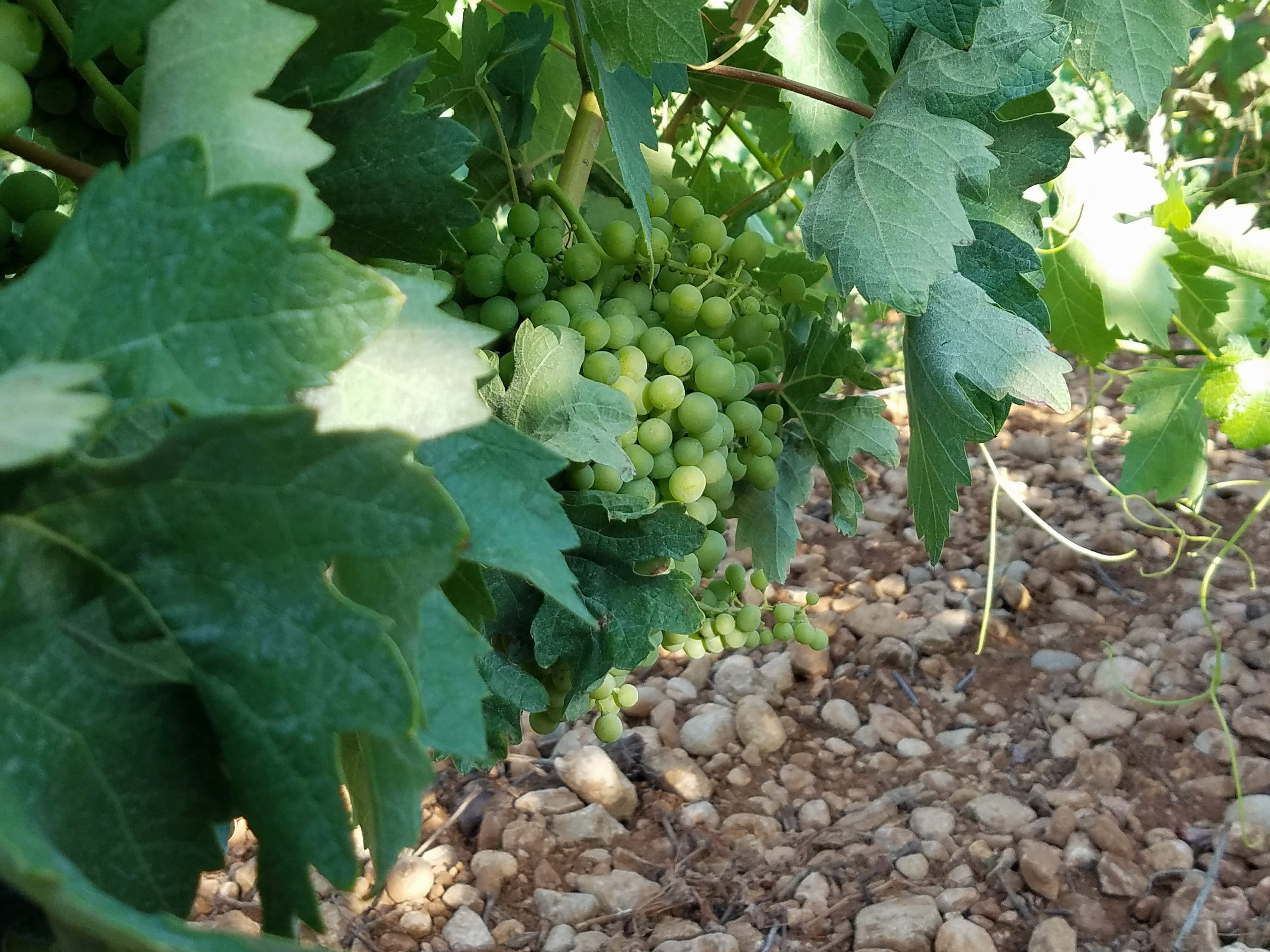
I was invited by the folks at the Stoli Group to go to Navarra Spain for a visit of the Arinzano Estate. Senorio de Arinzano was purchased by Yuri Shefler, owner of Stoli vodka from the Chivite family in 2015. Yuri happened to vacation at Arinzano just outside the city of Pamplona and fell in love. He decided to do what any sane billionaire would do, he bought it. What! Vodka and wine? How could that ever work? What does a Russian vodka producer know about wine? Absolutely nothing! Guess what? It works.
Can’t have enough rose, especially in a place like this.
The smartest business people in the world know how to invest, the most successful surround themselves with experts and let them do the hands on work. This is exactly what Yuri did. Yuri hired Manuel Louzada, the man behind Numanthia as chief winemaker and CEO. Most importantly, he gave him carte blanch to “make Arinzano great again”. Manuel is probably the most well known and respected winemakers in Spain. While Yuri was shopping around for side projects, he came across an equally as prestigious winery on the other side of the world, Achaval Ferer in Argentina. Manuel took control of this project as well. The vodka tycoon left Manuel in charge of two of the most important wine estates in the world. What do you suppose Manuel did?
The enthusiastic Manuel Louzada with Cabernet wine maker, Miguel tasting us through old vintages of Arinzano.
Manuel has been around. He spent many years with Moet Chandon and brought greatness to the Toro region with Numanthia Termanthia. He did not do it alone, he always had a solid team around him. I am not sure if it was his outgoing spirit, his pursuit for perfection or his generosity; but he was able to drag his sales and winemaking team to Arinzano with him. Bring a strong team together to a property where it is impossible to grow bad grapes, throw in a fat check book and you are bound to get some of the best wines in the world.
Team Arinzano!
Arinzano is the first Vino de Pago in Northern Spain. A Vino de Pago is a classification given to unique estates which produce high quality wines outside the DO because of its soil, climate or terroir is so unique and cannot be matched elsewhere. Arinzano’s vineyards are devoted to mostly Tempranillo, Cabernet Sauvignon and Chardonnay. It is nestled within hillsides facing North where a cooling wind blows continuously across the vineyards. The soils are of decomposed granite with limestone. A small mountain range to the North protect the Pago from moisture and humidity.
Northern mountains blocking sea moisture
rocky soils
Manuel inherited an estate known for making incredible wines. He took the estate and perfected it. He changed canopy management on the Cabernet which removed the green pyrazine and increased the fruit flavors. He changed the barrel program and now uses a mixture of coopers. Each barrel brings a unique attribute to the final blend. He invested in moving winery walls and machinery so that wine making is clean and efficient. I am talking about millions of dollars invested with the sole purpose of producing world class wines.
Arinzano barrel
What I learned from this trip is that wind, soil, vines and sun are not the only things important in making quality wine. What is equally as important is culture. The folks at Arinzano embrace this and made sure that we understood. Instead of staying at the winery and discussing viticulture and oenology, they also showed us how important the Navarra culture is to the wines at Arinzano. We spent the day in Pamplona. We watched the running of the bulls, sat through a bullfight and enjoyed an amazing local meal in a Michelin star restaurant. We danced with the people of Pamplona at 10 in the morning, we danced with them in the afternoon and continued dancing in the midnight hour. The culture is festive with a love for live. We also visited San Sebastian where we got to see where the locals vacation. More importantly we got to stand and look out at the vast ocean, feel the wind blow on our faces. The same wind which 150 km away is blowing on the vines at Arinzano. Great wines are made by great people, great cultures and great places. Arinzano is one of those wines.
I thought I knew Aussie wine. I knew that it wasn’t only that wine with a yellow Aboriginal drawing of a kangaroo and boomerang. Isn’t it high quality Shiraz/Cab blends from Barossa Valley? The wines are big fruit bombs, right? Or maybe austere Clare Valley Rieslings. They are light, fresh, petrol and lime driven, right? My perception of Australian wine was turned upside down after the James Busby Travel trip I took in October. I felt like Doctor Strange entering Kamar-Taj for the first time. What I thought I knew slapped me on the palate and turned my olfactory bulb inside out. Here is what Australian wine is all about!
Cool Climate Terroir
Bill Downing makes some of the best wines in Australia. His wines are all about terroir, wines made in the vineyard. Most of his fruit is sourced from specific bio-dynamic growers. His approach to making wine is not making it, but letting it become what it intended to be. It is a hands-off approach resulting in unique mind-blowing wines. Bill believes terroir is much more than just growing grapes in a particular soil type, but it is about the people, the climate, the animals and plants in that place which influence the wines.Winemakers in the Mornington Pennisula struggle with cool wet weather. Pinot Noir does extremely well. With a minimal approach, whole berry and cluster ferments, they make wines that are aromatic and elegant. Story and Garagiste Vineyards source grapes throughout the Mornington and the Grampians. Best part of cool climates is the ability to make sparkling wine. And I am not talking about Sparkling Shiraz, but proper method Champenoise with Pinot and Chardonnay.
The Yarra Valley
The Yarra is located in Victoria and divided into the lower Yarra and the upper Yarra. The region was once planted with grapes to make sparkling wines, today we find some of the best Chardonnay and Pinot Noir can be found here. Yarra Chardonnay is unique and coming into its own. Tim Wildman gave 12 reasons why Yarra Chardonnay stands out: cooler sites, early picking, better clones, hand harvesting, whole bunch press, smaller ferments, old oak to mature, larger oak formats, no batonage, do not force malo, use of screw caps, sulfites are set in vineyard and natural winemakers are looking for textural Chardonnay. The Yarra is home to some of the best wines in Australia, DeBotoli, Luc Lambert, Gembrook, Mac Forbes, Giant Steps, Yarra Yering and many more.
Sarah Crowe, winemaker for Yarra Yering
DeBotoli Vineyards
Winemaker Mac Forbes standing in Denton Vineyard
A little friend in the Gembrook vineyards.
High Quality Dessert Wines
The first wines made in Australia were ports. The tradition goes back almost 200 years. As modern wine-making techniques began to develop, more and more wineries began creating dry still wines. Today there are a handful of wineries still focusing on their family traditions. Many of these are in the Rutherglen and Barossa Valley. Muscat is the grape most commonly used. Wineries such as All Saints, Campbell’s and Seppeltsfield pride themselves on fortified dessert wines of high quality. Today, some young winemakers are looking back and experimenting with fortified wines with a natural twist.
Solera System and large format barrels at All Saints.
Campbell’s Solera Muscat
Drinking my birth year port at Seppeltsfield
Natural winemaker Cole of Adelina in Clare Valley sharing Amphora Sherry.
Old Vines
Old vines is a loose term. In some places it can be a 10 to 20 year old vine. California may have 50 year old vines. France might have some 70 so years old. Both of these regions were devastated with phylloxera. Australia has been phylloxera free due to it’s isolation from the rest of the world and sandy soils. Some areas like the Yarra Valley are under threat, phylloxera has started showing up. However, in places such as the Barossa. McLaren Vale and Grampians there wines being produces from vines which were planted on the 1840′-60’s. This old plant material produces very little juice, but the little it does produce is heavenly. If California calls wines from vines planted in the 80’s old vines, then Australia should call them ancient vines. Stand out wineries producing old vine wines are Tahbilk, Darenberg, Best’s, Langmeil, Cirillo, Penfold’s and Yangarra.
Mixed planting of old vines at Best’s in the Great Western.
Old Vine Pinot Meunier planted in 1868
Marco Cirillo showing off his Grenache basket pruned vines planted in 1850.
Langmeil Shiraz vines planted in the Barossa in 1843
Bio-dynamics & Natural Wine Movement
If there is one thing that stood out for me in Australia was to see how far ahead the Aussies are in regards of organic viticulture and natural wine-making. You may have experienced natural wines from different regions in the world, but what many forget is that in order for a natural wine to succeed in the glass, its process needs to begin in the vineyard. Most of the young winemakers in Australia have embraced this concept. Their wines are not faulty, but fresh and bursting with acidity. Winemakers from all over Australia are fed up with flabby fruit juice called wines and are in search of structure. The Adelaide Hills are filled with garage winemakers producing some of the best Pinot Noirs on the planet. Their hands off approach to wine-making is best seen in their big reds, where the alcohol and fruit does not over power the pristine acidity and ripe fruit.
Alpacas in the bio-dynamic vineyards of Gemtree in McLaren Vale
The bull horn filled with fertilizer, essential in biodynamic farming
One of the best wines I tasted in Australia, Ochota Barrels.
A line up of natural wines in the Basket Range in the Adelaide Hills.
Sacredness
Lastly, there are few regions in the world which make wine from sacred sites. We can say that the vineyards of La Tache or DRC in Burgundy are sacred since they were once owned by the church. We might throw Elqui in the high desert in Chile as being sacred, however I haven’t had wines from there that taste sacred. I came across one of the most interesting vineyards in the world, the Bindi vineyard in the Macedon ranges on the slopes of Mt. Gisborne in Victoria. Upon our arrival to the winery there were herds of kangaroos chilling and watching us approach as if they were guarding their sacred land. The soils are composed of quartz and rocky earth. There was a sense of serenity in the vineyard. At dinner our group bonded when we discussed what brought us into the world of wine. This sharing was magical. But to top it off the wines were outstanding. We tasted Chardonnay and Pinot Noir from 1991 to 2015, and each wine was divine. This has got to be one of the most memorable tastings of my life.
Walking through the quartz vineyard with winemaker, Michael Dhillon
I have taught at San Diego State University’s Business of Wine Program for several years. During my California Wine Intensive course, I always talk about reading the back label of a wine to have a better understanding of how involved in the production was the winery. Was it “cellared and bottled by”, “produced and bottled by” or “estate grown, produced & bottled by”? They get a kick out of seeing how many labels we see in the market place which have very little to do with growing grapes or even making the wine. The TTB mandates that the front label displays the type of grapes, where they come from, when harvested and the alcohol level. On the back label they tell us how much involvement the winery had in the production process. However, the back label omits something very important; what was added during production.
Why is wine so different from other consumer goods? Why isn’t wine held to the same requirements other packaged goods must adhere? There are two sides to this argument. Wine makers would have to change labels every vintage. The additives and additions change from vintage to vintage. Most of the additives added are harmless. Stricter labeling laws would result in higher priced wines. On the other side of the argument, people want to know what is in the bottle. Were there any additives or flavorings added to the product? In the mind of most people, wine is a natural product and it is what it is, fermented grape juice aged in oak. Only if that was the truth. Unfortunately, most wines are full of additives. Granted most additives are there to improve the wine.
In 1987 wineries were forced to mention the use of sulfites, people magically developed headaches and allergies and blamed sulfites. Sulfites have always been in wine to prevent bacteria growth. Amounts used vary from region to region and producer to producer. When it became required to list on the label, people’s buying habits changed. Most did not care, but others whom were more sensitive, started to look at bottles to see if the wine contained sulfites. I guess we can say they became wiser consumers. Of course we know that the headaches are alcohol related and not so much from sulfites. Funny thing is even though alcohol level is on the label, most do not read it. They would rather blame chemicals for their discomfort.
Consumers are very worried about ingesting non conventional chemicals. Most consumers have no idea what goes into a bottle of wine. Just when they were trying to get our heads around sulfites, here are some other additives we may see in wine: yeasts, tannins, bentonite, dried fish bladder, gelatins, egg whites, sugar, tartaric acid, malic acid, lactic acid, calcium carbonate, acetaldehyde, dimethyl dicarbonate, mega purple, oak chips, pvpp, potassium sorbate and the list goes on. Many of these additives might seem familiar since they are in a lot of our packaged foods. We have become used to reading the back of labels and are okay when we see the word “calcium” or “potassium”, we don’t bat an eye. But mega purple? This is why I don’t buy Velveta cheese it has apocarotenal coloring. Some of these additives help stabilize wines and are an important part of wine making. However, others are there to modify wine or rather, improve poor quality wines. Kind of like the coloring added to Velveta, used to improve the color of poor quality cheese stuff.
Worst case scenario is when the two buck chucks of the world use fining agents that release arsenic into the wines. How many people would still buy a $2 wine if the label said “some ingredients are known to cause cancer” and in bold letters arsenic. Safe or unsafe, consumers have the right to know what is in the bottle. I think its time for full disclosure in the wine industry. Let people make wiser decisions when buying wines. Hold wine companies accountable for trying to sell us swill by modifying with additives and slapping on an eye-catching label. It would also make producers of expensive wines focus on production in the vineyards and not the laboratory.
In my opinion if it is served in a package, then let us know what is in the package. We have a right to know. I don’t care if you modify the wine so that it fits a certain flavor profile, but let us know you are doing it. Otherwise we will think that Pinot Noir is supposed to be purple. Hopefully one day we can read the back label and know who, when, where and how the wine was produced. Where do you stand on this?
Immigration is a hot topic in the media today. My entire family were immigrants and look at us today, well integrated and contributing to society. I cannot stand aside and keep quite when I hear the rhetoric of how immigrants are destroying America. I will prove to you that without immigration we would not be enjoying what we enjoy most, alcoholic drinks. Here is a quick look at the history of alcohol and immigration and how it influenced our society, politics and traditions.
It is believed that the first alcoholic beverage was discovered by monkeys when they drank fermented date palms. Those monkeys soon realized that the world was a much better place to live in once they chewed on those dates. Ever since then humans have used alcohol for similar reasons, to improve the quality of life. At first it was essential, water was not palatable and fermented grain water and grape juice was. It also supplied carbohydrates, antibiotics (as discovered in the bones of mummies in Egypt) and of course made us happy. The first sign of fermented beverages were in the Caucasus mountains (where the Caucasian people came from), today known as the area of Georgia just north of Turkey and Iran. Mesopotamia eventually had the first city states which arrived from agriculture which was linked to farming grains for beer and bread.
As centuries went on, migrants from Phoenicia, Babylonia, Egypt, Greece Carthage and Rome passed through these areas changing alcohol forever. The Greeks were immigrants from the isle of Greece and brought wine to the Mediterranean regions of Italy, Spain and France. The Romans immigrated to northern Italy and learned wine making from the Etruscan, they went on to migrate throughout the European continent spreading vines, oak barrels and roads on which to spread more juice. They also learned from the Northern barbarians how to brew beer, mead and cider. They introduced wine to the Germanic tribes and Gauls.
Distillation was first discovered in Pakistan. It was perfected in Arabia buy Muslims. The Moors migrated to Spain and with them brought distillation. Celtic immigrants in Northern Spain were booted from the country and pushed north to Whales and Scotland where they invented whiskey. The English migrated to Portugal and Spain where they found sherry and Madeira. Madeira became the staple for England’s major migration throughout India, Caribbean and America. The wine lasted long voyages and traveled well, it kept the English alive and drinking.
What about illegal immigration? What I mean is slavery. This is really the only real illegal immigration that ever existed. Africans pulled away from their lands and brought against their will to the islands of Barbados to make Rum. Rum became the spirit which changed the world. English plantation owners planted sugar cane, sold the sugar to England (eventually destroying the massive Madeira sugar trade by under pricing sugar) and with sugar’s waste, known as molasses created rum. Plantation owners of Barbados became the first Tycoons. Those tycoons returned to England and built porter breweries, forever changing beer. Rum made it’s way to the Americas where immigrants known as pilgrims were trying to make a go of it with beer and whiskey. Unfortunately grains were difficult to grow, rum was easy to produce and it became the drink of the colonists. England’s taxation on sugar, molasses and rum eventually led to the War of Independence.
Following the War of Independence, Americans stopped drinking rum. They turned to those Scottish and Irish immigrants who were producing whiskey in the back woods. Whiskey eventually became the American spirit. However, there was a temperance movement starting up in the early 1800’s which outlawed the sale of liquor. It did not last long, immigrants were smart and found loop holes. For example, instead of selling liquor they would sell a show and serve liquor for free. The temperance movement did not last long. There were more immigrants on the way to put an end to it.
The US was hit by massive German immigration known as the 48ers. These German immigrants brought with them the lager. The beer that changed the world. No longer were people drinking heavy stale ales, but fresh light low ABV lagers. These Germans became barons and the first lobbyist. They used their wealth to help change laws. They created the income tax, allowing them to win favor from the government. The US Government did not impede on there business and left them alone to produce beer, it was handsomely rewarded through taxation. The Germans brought with them the beer garden, a place for families to get together and spend Sunday afternoons. As the Barons become wealthier, beer gardens became theme parks. If it weren’t for immigrants we would not have America’s favorite past time, roller coasters and carnivals.
The down side was the temperance movement had almost a century to organize and latched on to anti immigration mantras as scare tactics. WWI gave rise to this new movement and with it came anti-German sentiments. Whiskey was a problem. The beginning of the industrial revolution brought stress to family life. The poor working conditions and low wages combined with the abuse of men drinking whiskey, led to a lot of spousal and child abuse. Rather than demonizing whiskey, it was easier to demonize beer since it was made by Germans. It was easier to get people to hate the German’s than it was to hate American whiskey. This anti immigration scare tactics led to the darkest times in our lives, PROHIBITION. No alcohol for 13 years.
It took another immigrant force to make a change. The Cuban and Italian immigrants. Cuba became the place for wealthy Americans to go and have a drink. Cubans saw that there was a need for liquor in the US. Most of the US distilleries closed and those that remained opened were forced to produce alcohol for medicinal use. Their limited production was not enough to feed the rise of many speakeasies and under ground drinking joints. Rum was easy to bring from Cuba. The Italian immigrants being wise business people, took the lead with bootlegging. Hence the rise of the Mafia’s power. This bootlegging led to the resurgence of Rum in America. after prohibition, whiskies still needed to age, and rum was readily available. And so was the only drink that prospered from prohibition, Coca Cola. It was a no-brainer, the Cuba Libre. We later saw Hollywood jump on the rum wagon and Tiki became they thing. Cocktail bars pooped up, Elvis goes to Hawaii and Gilligan gets stranded on an island.
Prohibition ends, and WWII begins. Instead of being able to produce grains for beer and whisky we had to produce grain for the war effort. Not only was rum an obvious choice, but so were grapes. However, WWII brought its own discrimination against immigrants. This time the Asians. The fact that we were at war with Japan, meant that at home we were at war with the yellow people. Up to this time, the grunt work force were the Chinese. We needed a new grunt worker. So we opened the doors to Mexico and invited a new worker through the Bracero program. These Mexican workers were temporary workers. Eventually Mexicans from southern Mexico made there way north and gave rise to to our border towns. This work force also gave rise to wine in America. Without the Mexican we would not be able to enjoy Napa Cabs.
These immigrants also brought with them a new spirit, Tequila. Tequila was easy to get. Whiskeys need time to mature and whiskey was not readily available. Tequila was ideal. It soon became the drink of colleges and fraternities. And to this day everyone has a tequila story. The tequilas of this time were pretty awful. This is why people bit in to a lime and licked salt so that they could cover up the taste. Tequila has changed drastically, so please, do not ruin today’s Tequilas with lime and salt. And the only reason you have a tequila story is because you shot it, so please take your time when drinking Tequila and sip it.
Although Vodka is really not directly related to Russian immigrants, it is today’s most order spirit. It came to fashion during the cold war when Americans took an interest to the taboo. Wasn’t it strange that we were allies in the two World Wars, and immediately following them we became mortal enemies. Then there was all this anti-communism banter, which only made us more inquisitive. Our best marketing firms new how to sell vodka. They sold it as the “breathless” spirit, meaning that you can go on your lunch break shoot back a few martinis and return to work without anyone noticing it on your breath.
Okay, it might not be related to immigration but it does make me think that whenever America has an enemy in the world, it might be good to see what they drink. So far all our enemies and unwanted immigrants have given us something to drink which I would never want to return. Today we are back where we started, political leaders preaching anti-Muslim rhetoric. Let me remind you that if it was not for these non-drinking people, we would not have liquor today.
This brief look at the history of alcohol brings to light the importance of immigration. Immigrants are looking to better themselves. When a person’s frame of mind is one of improvement and forward thinking, only good things can come. It is rather those that feel that they are entitled to something with out working for it that effect us in a negative way. Be aware of anti immigration rhetoric and look back through history and see what immigrants have accomplished. America not a melting pot where we melt into one sticky gooey homogenized fondue. America is but a punch bowl. Some of us are limes, some of us sugar, others water, and the rest of us are different fruits; each ingredient makes the drink more complex and delicious.
“Our national drug is alcohol. We tend to regard any other drug with extreme horror” – William Burroughs
“Remember, remember always, that all of us, and you and I especially, are descended from immigrants and revolutionists.” – Frankin D. Roosevelt
This April my focus is to run an extensive cocktail month across my many restaurants. Most of you know me as the wine guy, but for the last 3 and a half years my focus has been much more so on liquor and beer. The trends across my restaurants are liquor and beer increasing as a percentage in sales a much higher rate than wine sales. It makes me sad to say that wine has taken a steady decline. But I cannot get dragged down by, I have to focus on what people want. And it seems as though they want spirits. April will be CRG Cocktail Month. I have a lot of really cool promotions, events and dinners planned out. Make some space on your calendar and check out a few of these events.
PROMOTIONS
Two company-wide promotions you will have to check out. We kick off the month with $5 cocktails. Come in to any of the participating restaurants and check out my bartender’s creations for $5. Each restaurant will have a different selection of 5 cocktails for $5, all day long for 5 days! This will take place April 2nd-6th. Come mid-month, just as you are turning in your taxes, and we will turn on the cocktail specials again. This time enjoy 2 cocktails for the $10.40. Drown your tax woes with a friend and try any of the participating restaurants’ fresh cocktails. Whether it is Vodka, Gin, Tequila, Rum or Whiskey; we will have something for you.
EVENTS
The most fun part of my job is coming up with creative events where you can enjoy an afternoon or evening with friends. Some are educational while others are a good party. The first event of note is a two part event. At Sea 180 Coastal Tavern I am inviting local distillers from Henebery Whiskey, Malahat Distillers and Cutwater Spirits for a panel discussion and tasting. We will meet in the Boca Rio room where the distillers will talk about their projects and walk us through their spirits in a classroom style tasting. Following the panel, we head out to the Patio for a cocktail party. Sea 180 will provide snacks and live music. You will enjoy live cocktail demonstrations with local spirits. See, you can have your cocktail and eat it too, get educated while you party! Only if this was available when I was in college.
Mid-month we pay homage to my favorite spirit, Tequila! Our first annual Tequila Fest will be held on the Harbor Float at Coasterra. Deborah Scott features the signature dishes from her 5 restaurants, Coasterra, Island Prime, C-Level, Vintana & Indigo Grill. Tequila and Mezcal producers will taste you on their best agave spirits. I will be releasing our collaboration with Modern Times and Azunia Tequila. I have been working on a very special beer aged in Tequila barrels and flavored with salted plums and tamarind just for this event. And to bring even more life to an already bumping party, DJ Süsio spins Latin Beats. Your ticket gets you 5 food tickets, 1 signature cocktail and unlimited tastes of agave spirits. For those of you looking for wine, beer or creative cocktails, a full cash bar will be available.
The last major event is a San Diego Bartender Competition. We have invited the top bartenders in the city to join us at Analog for a friendly competition with Makers 46. Maker’s Mark will be there sharing and teaching guests about whiskey and their many brands. All the while, a live bar competition will take place. Bartenders will compete in a two part competition. The first, they bring with them their best Maker’s Mark 46 cocktail. For the second competition they will be given a limited amount of time to create a cocktail using a secret ingredient. Analog will provide snacks for everyone, tastes of Maker’s whiskeys and a full cash bar will be available in the Karaoke room.
DINNERS
To round out the month our chef’s host dinners at their restaurants. All cocktail inspired of course. 333 Pacific, our vodka lounge, has Chef Steven Zurkey pairing his delightful creations with Absolut Vodka. C-level’s chef, Mike Suttles is pairing whiskey with his creations. Bo Beau + Garden’s chef, Tyler will have a variety of spirits to choose from and doing a cocktail dinner. Finally, Vintana is hosting an interactive brunch, Brunch en Blanc. Every one dressed in white trying white spirits paired to Chef Bryan Brown’s brunch favorites. In true Vintana fashion, live music will be played during this brunch while bartenders shake up white spirits for you to enjoy.